Showing posts with label science. Show all posts

Wednesday, July 10, 2019

Building the Vermicomposter

We have been attempting to figure out how to build the Vermicomposter since last Wednesday (July 3rd.)  As of today, it is still incomplete, but is far more along than it has ever been in the years since it's been ordered.  Unfortunately, the directions that came along with the composter were extremely unclear and did not specify how and where things were put together, leaving us to deduce the construction of the machine ourselves.  We hope to get it done by this time next week, but Murphy's Law was not kind to us so far.  Hope for the best and prepare for the worst!  The following will be pictures of our progress so far.

I didn't get a picture of everything on the floor before we took it all out and sorted them, but trust me, it was really messy.

Setting up the skeleton of the beast, the two side rails attach to the bottom grate
After a lot of head-scratching, we finally were able to figure out how the end caps fit onto the rest of the machine
My view underneath the machine as I tightened bolts
All of the things we still need to install neatly put away for next time!
Until next time!

- Mallory

Tuesday, July 2, 2019

A Return to Compost


A new summer, a new action plan.  Looking back at the first posts on this blog, I see so many things that we either never got around to or changed completely.  I wonder how much of this post we will have done by the time I look back on it next summer if I'm still here?  The Rocket has been forgotten for a bit since I've been gone and we've been switching to a new mentor, but I think it's time to revive her.  (Maybe giving it a pronoun will help us not forget it this time.)  Regretfully, Professor Araya is no longer working with us, as she has found better career opportunities outside of campus.  I'm super thankful for her coverage of the composting conference in Arizona.  Our new facaulty mentor is P.J. Ricatto!  I'll miss her a lot, but PJ is great to work with as well! 

Lonely woodchips

We started by putting all the failed composting material that came from the rocket into large buckets so that we could reuse the woodchips inside, and organizing the mess underneath the Rocket.  Most of what we had was either too dry or mostly woodchips, but I believe that we can improve this soon.  We have already talked to the Dunkin Donuts and pizza staff at the first floor cafeteria here at BCC to help us, and hopefully they can learn to only put in food and not other garbage.  Fingers crossed!

For now, we plan.  We're hoping to put together our vermicomposter (finally) soon.  Time to feed some worms!

That's all for today.

- Mallory E.

Looking a little better, but still much to do!

Thursday, February 7, 2019

DAY 3 -- COMPOST CONFERENCE

I slacked a bit and never got around to Day 3...  until now! :)

The conference experience was wonderful and I would love to attend their 2020 conference. I believe students should attend as well. Who knew this many people are interested in the science of compost. It has become a profitable business for many and a source of improving their livelihood.

Here are some of the highlights from Day 3:

Jeff Lowenfels of Anchorage, Alaska is the author of The Teaming Series Books for Organic Growing. His books include Teaming with Microbes, Teaming with Fungi, and Teaming with Nutrients. Each of these books delves into major detail about the different elements essential to crop growth. I was especially interested in his talk because he is an expert on the microbial communities of compost. It is difficult to squeeze the benefits of each microbe into a 20 minute talk, but the gist of it was that microbes are so important to plant development! When people think of microbes they generally think "eww germs", but in reality we cannot survive without them. If we were to take a heap of soil and remove all microbes from it, there will be no life that will come out of it.

Another important speaker that impressed me was Rick Carr from the Rodale Institute in Kutztown, PA. Because this town is somewhat close to home, I went ahead and looked into possibilities for student internships. Here is the page that I found from their website (internships are located at the bottom). This talk focused on the research that has been done at Rodale Institute regarding how utilization of compost has suppressed the issue of plant diseases that many farmers have to deal with. His research focused on common parasites that target the farmers' cash crops and they relied on his research to help them combat these challenges they were facing. This talk brought to light the importance of having a good biological community.

The last session of the day was focused around regulations regarding how different states enforce their laws regarding composting. The first talk of this session was by Matthew A. Karmel, environmental lawyer and founder of the New Jersey Composting Council. I was thrilled to meet someone from New Jersey who shared a passion for reducing food waste. He was able to share some information regarding some of the goals New Jersey has for the future, including their legislation to reduce our state's food waste by 50% by the year 2030. I was very excited to speak with him after his talk. We exchanged business cards and discussed ways in which students at Bergen Community College could help contribute to this goal.

In closing, I think this conference helped me to see just how far behind we are in terms of how we are managing our waste. However, I am very happy to have made a contact that I believe will help us to create sustainability goals at our campus.

Wednesday, January 30, 2019

DAY 2 - COMPOST CONFERENCE 2019

Posting twice in one day because yesterday was a looooong day!

I'll start with some good news. New Jersey has officially started a chapter as of August 2018! This would allow scientists and students around the state to do research through the Composting Council Research & Education Foundation and be recognized by the United States Composting Council (USCC).

I was able to sit in on the annual meeting for the Compostable Products Task force, sponsored by the Biodegradable Products Institute (BPI). The purpose of this meeting is to meet with members of the USCC to the issues surrounding biodegradable products. Actually, I was corrected after I misused the word "biodegradable" when I actually meant "compostable" with regards to speaking up about how our college campus uses these products and we are interested in learning more about how to compost them properly. This is actually a topic that deserves a lot of attention so let's talk about that for a bit.

I linked the phrase above to BPI's page about what the differences between the two terms is, but it brings up the issue with regards to the waste diversion system. One of the important differences between these terms is that "biodegradable" has no ties to how long it takes to degrade naturally. For example, it takes a plastic bottle almost 500 years to decompose naturally (here is a link to more examples). Yes, it is technically biodegradable, but it cannot be returned back the earth within our lifetime. Instead, if we are looking to utilize a single-use fork, we should opt for a compostable type (preferably a reusable type like silver metal one that can be washed!). This could be wood, or Eco Product's Vine Cutlery made of polylactic acid (PLA). I spoke to a representative from Eco Products who gave me a catalog to read through to see the varieties of eco-friendly products available as an alternative to the traditional plastics. Here is a LINK to their line of forks; note that only two of these options are compostable and the others are not compostable, such as their Plant Starch Cutlery option.

Going back to the conference... I walked away from this meeting with contact information from one of the USCC members to let them know I have students back home who are willing to do research to contribute to their database of how our composting efforts measure up!

Another session I visited was by Assaf Sadeh from the Soil Control Lab in Watsonville, CA. By the way, he says he would be happy to test our compost from our Rocket system free of charge! His talk discussed the many ways in which we can analyze our compost quality.

After this session, I attended three sessions by sustainability advocates at different universities:

  • Nicole Berg from the University of Michigan gave a talk about how she introduced a post-consumer composting program at her university. 
  • Lotus Thai (who is also a fellow SCUBA diver!) talked about how she does waste audits and flaunted her amazing program at the University of California, Irvine. California, as we may already know, is a champion when it comes to their sustainability efforts. UC Irvine's sustainability program has reached nirvana as far as I'm concerned when it comes to establishing successful composting programs. 
  • Julie Muir from Stanford University talked about how Stanford (yes, the big school that everyone wants to get into!) takes more of a community outreach approach to getting their students and faculty involved. 
Some things I got from these sessions: 
  1. A lot of these efforts are funded by the Office of the President
  2. Each department from their university puts aside funding to contribute to these efforts.
  3. I am jealous of their successful programs. 

In closing, we have a lot of work to do! Hopefully with the new chapter of the USCC in New Jersey, we will be able to make BCC known to the public and show that we too want to help New Jersey reach its sustainability goals. 


Monday, January 28, 2019

DAY 1 - COMPOST CONFERENCE 2019

Greetings from sunny Arizona! Linda Araya here, project mentor for the composting project at Bergen Community College (BCC), and I am at the Compost 2019 conference hosted by the United States Composting Council whose goal is to create awareness in the benefits of composting for healthier soil, cleaner air and water, and a more stable climate. Many of the attendees at this conference are industrial farmers, business owners, and students and we are all interested in learning more about composting and its glorious benefits.

Here is a summary of Day 1 at the conference (click the links for more information):

Today's workshop was special because it was all about vermicomposting! Dr. Rhonda Sherman from North Carolina State University is an expert at worm farming and held a workshop titled "Boost Profits for Your Composting Operation with Value-Added Products" to teach us all about the benefits of vermicomposting, how it is different from composting, and also shared some tips for those interested in getting started in vermicomposting on a small or large scale. She also wrote a handbook for those looking into getting started and contains 25 years worth of information she has gathered throughout her work as a vermicomposting scientist.

So I learned something new today... vermicomposting is not composting! Vermicompost is not compost. Vermicompost tea is not liquid from the worm bin. Let that sink in for a bit. I knew I was entering territory outside of my expertise although I was able to answer a lot of the questions about the biology of compost (if I can find a link to her presentation, I'll try to link it here somewhere.) At BCC, we utilize an industrial composter called the Rocket composting system. We are a bit spoiled because it removes a lot of the labor we would otherwise have to put in for the amount of effort it actually takes to compost in a traditional manner. However, with vermicomposting it only takes between 40 and 60 days to gain beautiful, rich soil. For those of you who think of soil as "just dirt" know that even though to our eyes it may not look like much it is actually filled with life and lots of chemistry, we just can't see it. With vermicomposting, the stars of the show are the worms Eisenia fetida. Their poop is what everyone is after. Their excrement creates businesses, increases crop yield, and is highly coveted (if you are interested in learning about earthworm husbandry the right way, click HERE). You can do this either on a small scale in your kitchen or on a larger scale and make it into a business. There are many ways you can make it profitable with minimal startup costs. The thing that vermicomposting and traditional composting have in common is the fact that they are both ways to help you reduce your food waste. The ways that you do them are very different, but they each help tackle the food waste issue.

After this amazing talk Mr. Zach Brooks, owner of the Arizona Worm Farm, talked to us about his dream that he built and made it into a reality. He was able to purchase land and begin his business where he sells "worm castings" (aka worm poop), vermicompost tea (NOT for drinking), and worms! (I found this podcast where he talks about his farm HERE). After his talk, we took a drive over to the farm. Here are some pictures from the day.

Wednesday, July 25, 2018

Project Setbacks and Solutions

Unfortunately, we don't have any soil that we can use yet.  In fact, it appeared that our Rocket only wanted to spit out woodchips for us.  Luckily, we were able to get a man from Food Waste Experts (the sellers of The Rocket) to service our Rocket.

We now know how to properly work the rocket!

First off, a mysterious plug that was chewed up by a groundhog was important to the Rocket...  It powers the fan so that the excess gasses can be vented out.

We also found out that we need an equal part of woodchips for the food we put in.  Basically a one for one ratio.  We got some woodchips, however...  They're all wet.  So we need to get those all dry...

We also found out a "recipe" to "reset" the rocket.  Three times a day, we need to feed the rocket compost, food, and woodchips.  After this, the rocket should be ready to take food and woodchips to give us soil.

It appears that the two of us, along with the occasional student, do not make enough food for the Rocket to truly work.  The food is basically turning into dust inside the dry machine.

We have plans to fix this though!  We're making a call to action:  More food, and more often!  Every day we need a bunch of food, almost three times what we've been putting in just by ourselves.  We need a working woodchipper so we can get ourselves dry woodchips!  We need a hose for water access and to clean the drainer, we need a pitchfork and shovel for our piles, and we need a place to cure what the rocket spits out.

It feels as though we've taken one step forward and ten steps back, but I believe we can do it, all together, with the help of lots of people on campus!  We need food from everyone, and we need to recruit more people.  I believe with hard work, we can really get this going!

Wednesday, July 18, 2018

Soil Nutrients

The majority of plants that grow naturally in the East Coast require sixteen essential nutrients, which they need to have in their soil so that they can thrive and grow.  We are hoping that our soil will have these nutrients, and if it doesn't, we will try to add them.  Luckily, Rutgers offers soil testing, as kits can be quite expensive the more detailed they are.

The four main nutrients:

  • Carbon
  • Hydrogen
  • Oxygen
  • Nitrogen

Five Macro Nutrients:  (Macro means big, meaning it needs lots of these)

  • Phosphorus 
  • Sulfur
  • Calcium
  • Potassium
  • Magnesium


Seven Micro Nutrients/Trace Elements:  (Micro means small, so it only needs a bit of these or just barely any)

  • Boron
  • Copper
  • Iron
  • Manganese
  • Molybdenum
  • Zinc
  • Chlorine


Contaminates it should have very low or no amounts of:

  • Arsenic
  • Lead
  • Mercury
  • Nickel
  • Cadmium
  • Copper
  • Flourine
  • Zinc
  • Manganese 
  • Boron
And absolutely no plastics or other unnatural waste!

Monday, July 2, 2018

Waking Up the Vega-Watt

A few years ago, our campus bought a Vega-Watt for the campus.  It was supposed to take in used cooking oil and be fueled by it.  It doesn't change the oil besides filtering it, it is simply capable of creating power from the oil with its alternated engine.

However, the machine was never used, and thus rotted away surrounded by old leaves and garbage.  We had to fix that!

Here's the open machine


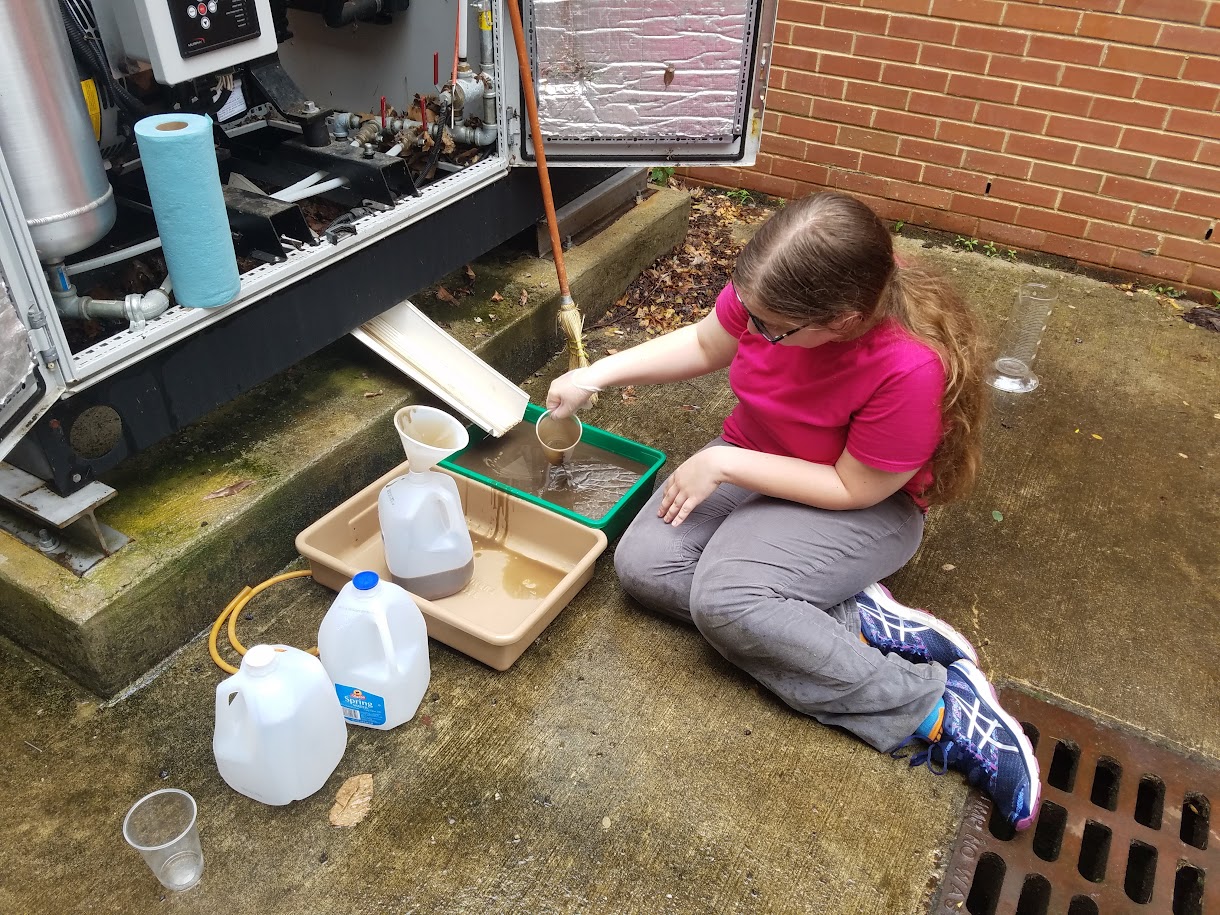
First off, we had to change the oil in the machine.  It seems like perhaps it was filled with oil at some point, and it mixed with rainwater and filled up the reservoir in the engine.  We figured out a way to drain the oil using a storm gutter and some dish pans.  There was a lot, and we didn't want to contaminate the environment, so we had to be very careful.

Here is Luis undoing the bolt that is holding back all the liquid


The oil and water were sitting together for so long the water had a weird color to it.

Now we start to see chunks of oil


Here comes the oil that was all on the top, as it doesn't mix with water!
Almost went over the top, but we had just enough room

Gloves for safety, very weird looking.

After this all was done, we had to safely get the oil and water mixture into a container so it can be properly disposed.  with gloves and a plastic cup, I slowly dumped the mixture into three 1-gallon jugs.


Then everything was finally clean!  We still have a lot more work to do, but everything looks much better now.

Until next time!
-Mallory

Thursday, June 14, 2018

The Four 'R's

To reduce waste on our planet and prevent the environment from getting worse, there are four R-words that we can follow to help our planet recover from the waste we have caused to pile up throughout the years.


Reduce


Try not to buy disposable items.  Think of all the thousands of tea bags, disposable razor blades and styrofoam cups are thrown away every day.  Styrofoam is especially bad for the environment.  Try to reuse these things, or find a version that is reusable.  

Reuse


Try to fix things rather than buy new ones immediately.  There are plenty of items that you can reuse instead of throwing away.  If a shirt rips sew it, if a button comes off sew it back on.  If an electronic breaks fix it or figure out a solution.  Not everything has to be thrown away immediately!  Rather than tea bags, invest in a tea infuser.  Instead of paper cups, use washable glasses.

Recycle


Sometimes you can't reuse or fix something.  Try to find a way to recycle it!  Old batteries and electronics can be recycled.  So can plastic bottles and aluminum cans.


Rot


The 'R' that everyone seems to forget.  Instead of throwing away apple cores or banana peels, get a compost bin!  Throw the scraps in there, throw all your scraps in!  This reduces landfill waste while also creating your own usable soil.  Throw in a few worms if you want it to go faster!

If you want to help the environment, remember the four 'R's!  But don't feel bad about getting a fancy new computer for yourself when your old one was just fine.  Individual consumers don't effect the environment as much as extremely wasteful large corporations.  That's capitalism for you.

Monday, June 4, 2018

What Makes Ideal Soil?

So, what makes ideal soil?  To answer this, we first have to look at all of the different naturally occurring soil types.  Most gardeners group these types into one of five:

  • Sandy Soil:  Has the largest particles, does not hold onto water well.  Nutrients are very easily washed away.  However, it becomes warm fast when exposed to the sun.  It is also lightweight compared to the other types.  It is dry and gritty.
  • Silty Soil: This type of soil has smaller particles than sand.  This type of soil retains water slightly better than sand.  However, it doesn't hold many nutrients, nor is it aerated well.  It also tends to be too compact and thus can get too wet for the plant.  It is smooth to the touch, and becomes slick when wet.
  • Clay Soil: This soil has the smallest particles of all the main types, allowing it to store water  and nutrients easily.  However, with how compact it gets, it can get hard and heavy once it dries out.  It also takes a while to warm up.  It feels sticky to the touch when wet, smooth when dry.
  • Peaty Soil: This type of soil is very moist and filled with nutritious organic matter.  It is very heavily saturated with water and sometimes can need to be drained.  It is capable of holding in moisture during hot and dry months while also protecting the roots from over saturation of water during rainy months.  It is slightly acidic.  Peat can also be a fire hazard if it gets too dry.  It is sponge-like to the touch, and may leak water when squeezed.
  • Saline Soil: Found in extremely dry regions, this type of soil has a very high salt content.  This soil isn't very good for plants as the salt suck up all the water that the roots can use.  It usually has a film of white over the top due to the salt.

Which of these soils is the perfect soil?


Botanists and casual gardeners around the world have used trial and error to figure out the ideal soil for their plants before we even had a Periodic Table, and from this we have learned that though every species of plants have different needs and chemical balances, there is one type of soil that has mostly perks and few downsides.

This soil is called "loam."  Loam is made by combining silt, clay, and sand, as well as a bit of humus.  It has a high content of organic matter, as well as being slightly acidic and high in calcium.  It is capable of holding tightly to water, but is also capable of draining access due to the space between the soil particles.  This is the type of soil we are aiming for when it comes to nutrition content, texture, water retainability and particle size.  According to AgVerra.com, "The feel test for loam yields a smooth, partly gritty, partly sticky ball that crumbles easily."  [Leineriza]

This type of soil is the end goal that we hope to achieve.

Now that we know the perfect texture for soil, what about the chemicals inside of it?  That will be the topic of our next post.

- Mallory

Thursday, May 31, 2018

An In-Depth Look at Our Process, Part 3

Previously I went over our second step which is all about creating compost from organic materials.  The compost is not yet ready to be used as soil, thus we need our third step.


Step Number Three

This step will be preformed by our wonderful worms.  Namely, the E. fetida species, also known as the redworm or red wiggler.  This species of worm dwells above the soil and can consume about 1/2 of a pound a day (1).  While this may sound like very little, we are going to be getting at least a thousand worms, just imagine how much they all can recycle!

National Worms & Compost, Red Wiggler, Compost Worm
The face of a hero.

What we're doing here is called "vermicomposting."  This means we will be using worms to help us out to make healthy soil!  The word itself comes from the Latin word for worms, vermes, combined with composting (2).  The literal translation would be "Worm Composting," which is exactly what we will be doing.  These worms, in combination with other microorganisms that naturally occur in soil, break down the material even further than normal composting would.  Basically, they eat and then pass the waste, and that waste is full of nutrients for plants.


Wednesday, May 23, 2018

An In-Depth Look at Our Process, Part 2

Previously I went over our first step which is all about creating energy from used oil.  This energy is used to power the machine for our second step, which also uses cafeteria waste.


Step Number Two


This step is 100% powered from the energy the VegaWatt extracts from the cooking oil.  Other than this, we are going to be using mulch (brand as of yet unknown,) and organic waste from the cafeteria.  In other words, we are going to be using leftover, unwanted or rotting fruits and vegetables.  According to the Food and Agriculture Organization of the United Nations, approximately one third of the food produced in the world is thrown away.  (1)  In the US alone, this causes a loss of over $680 billion.  (1)  Fruits and vegetables make up 50% of these numbers.  (1)  This is a lot of waste and puts a strain on our environment, as most of it ends up in a landfill where it cannot properly decompose and return to the earth.

This graph shows just how much food is wasted, and we can see that North America is in the lead. (1)
Via The Food and Agriculture Organization of the United Nations

What are we going to do with all this trash?  Enter the Rocket Composter, courtesy of Tiny Planet.
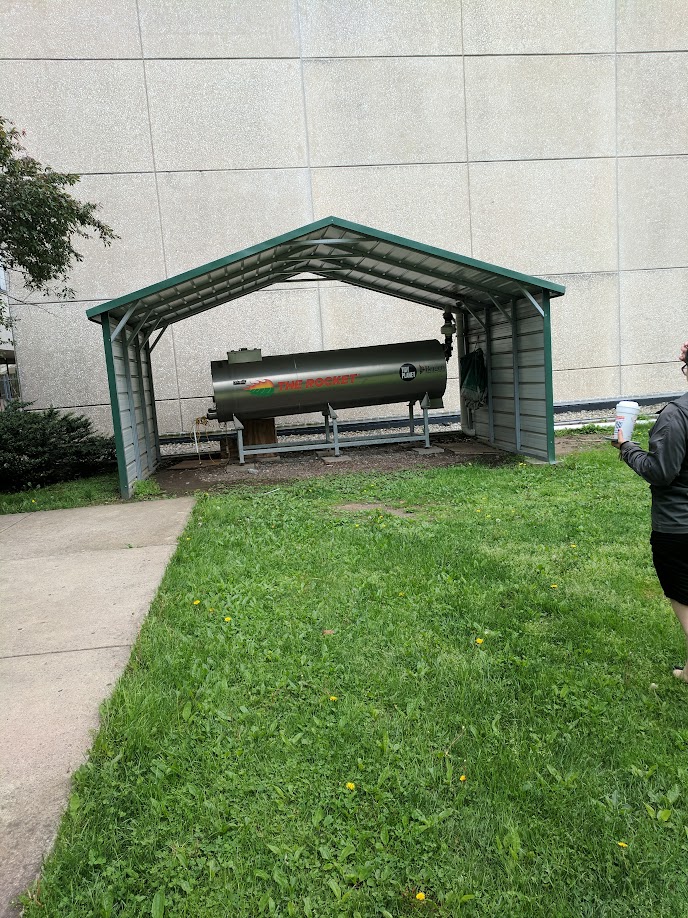
This is our Rocket Composter, right here at BCC.
Picture by Mallory Errichetti
This machine's origins can be traced all the way back to the 1990s, when a man by the name of John Webb decided there must be a faster way to get nutritious compost for his plants.  However, it wasn't until about 2001 while working with his son, Simon Webb, that the first Rocket Composter, (which was then referred to as the "Webb Composter,") was invented.  The new and improved device gave people a way to dispose of their food waste in a clean and efficient way.  The machine uses very little energy and doesn't require much other than to be turned on and fed waste and water, it does the rest all itself.
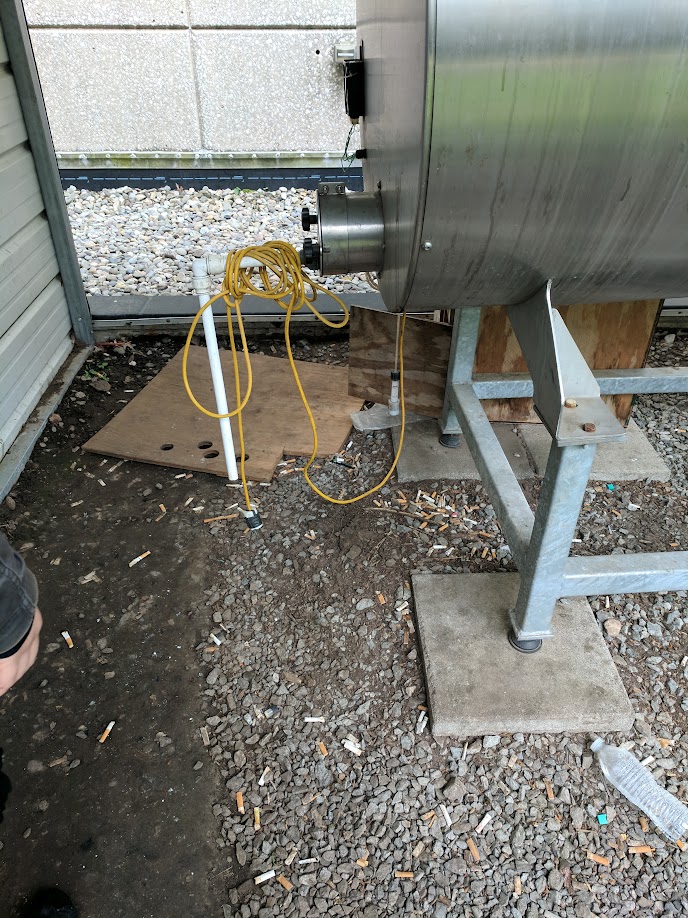
This is where the VegaWatt will be connected.
Picture By Mallory
So, how does this machine work?  To understand this, we have to look at how regular composting works.  Composting is when a mixture of water, oxygen, food waste, manure and soil is mixed together and turned over many days in order to create what looks like dirt, but what is actually a nutrient rich mixture full of nitrogen, phosphorus and other elements and chemicals that help plants thrive.  This happens because thousands of naturally occurring bacteria and micro-organisms (such as fungi or mites) break down the waste.  The bacteria do this via a process called aerobic respiration, which means they require fresh air to continue surviving.  (This is why the compost pile has to be turned daily.)  This process gives off tons of heat, and can even reach 68 C)

Normally, one would have to carefully nurture their compost pile, being sure to turn it, water it, and keep its ecosystem in check.  It can take weeks or months to break the materials down into a usable substance.  However, the Rocket Composter speeds up this process to take only 14 days.

The Rocket keeps the compost pile in optimal conditions.  It does this by constantly breaking apart and turning the materials, keeping the moisture levels high enough to water the bacteria, and temperatures hot enough to facilitate bacteria growth and consumption.  As the compost moves through the process, it is gradually brought to dryer and cooler conditions in order to make it fully ready to be used as fertilizer after the 14 day period.  The machine can be constantly loaded with new waste which will be added to the process efficiently.

Why Compost?


According to a three-year study in Vietnam via the Science of the Total Environment journal, adding compost to soil has a wide range of benefits to both the plant life and the surrounding environment.    (2)  Not only does it prevent loss of water to plants such as maize (Z. mays) by allowing their roots to spread deeper and holding more moisture, it also helps to prevent erosion.  (2)  By doing this, it can end up reducing the amount of times drinking water is effected by fertilizer.  (2)

(Unfortunately this compost alone is not usable soil, but rather fertilizer that can be mixed into the soil.  The third step is what turns it into actual soil, which will be covered tomorrow.)


Me with The Rocket
Picture by Mallory

Tuesday, May 22, 2018

An In-Depth Look at Our Process, Part 1


In a previous post I listed the three steps in our program, and here I will go in much more detail as to how the steps work, what our tools are, why they were invented, and what exactly composting even is.


Step Number One


Our first step requires used cooking oil.  This oil is going to be generously supplied by the Bergen Cafeteria here on campus.  This oil is used often in kitchens as it can boil as hot as 220 C, while water maxes out at 100 C.  Oil also adds flavour to foods like french fries and chicken fingers, which are often sold at our cafeteria.  After the oil is used for food, it is often thrown away as it becomes full of particles of the food it was used to cook and becomes unclean.  There are over 16,000 students at Bergen, if all of them wanted fries for lunch, we would end up throwing away almost 100 liters of used oil at the end of the day.
Image result for used cooking oil
These look disgusting, but are they useful?
Via Northwest VT Solid Waste Management District

This cooking oil, rather than being thrown away and potentially polluting the environment, can be used in a way that can end up helping the environment rather than damaging it.

Enter an invention dubbed "The VegaWatt."  This huge machine was invented by a man named James Peret, who noticed how restaurants paid about 100 dollars a month for companies to haul away their used oil in order for it to be properly disposed.  Peret decided that he had a great idea to both make money and reduce waste: turn all that oil into an energy source.
James Peret
The CEO and founder of Owl Power Company, James Peret.
Picture via his Twitter
Due to VegaWatt still having a pending patent, the specifics of the process is a closely guarded secret, other than the fact that it has a four step process of sterilization and filtering.  However, in an interview with NPR radio, Peret gives a summery of how it works, "[The VegaWatt] filters out all of the food crumbs... ...It heats it up to a point where the engine, which is a standard diesel engine or an industrial diesel engine, can utilize the oil.  [The] diesel engine turns a generator head, which produces electricity..."
Image result for vegawatt
A simple diagram showing the process
Via Popular Science

Though originally designed specifically for use in restaurants to reduce their electricity and hot water bills, we will be using it to power our second step in our process.
-----

Today Professor Araya and I (Mallory,) took a look at the VegaWatt outside.  It is a large machine that is not quite ready to be used yet, but I could tell that it was quite complex.  There is a pipe installed in the wall that leads to a vat where the cooking staff with dump their used oil, and on the other side is where our second machine will be connected in order to give it power.  The place where the staff will dump the oil is located up the hill from the VegaWatt itself.


This is our VegaWatt, the pipe on the right is where the oil will be dumped in.
Picture taken by Mallory


Here is the drum that the oil will be dumped into.

This will be connected to a pipe


Eventually this pipe will be connected to the piece shown above, the pipe leads to the VegaWatt.

Monday, May 21, 2018

Purpose

The purpose of this blog is to introduce, document, and log any and all information that will be potentially procured by this project.

Project Name:  3-Step Organic compost


Project Mentor


Professor Linda Araya - Professor of General Biology. I am interested in conservation and anything that can reduce waste including organic matter that is often thrown into landfill. My interests include computational evolutionary biology, ecology, reptiles, and living by the “5 R’s” (Refuse, Reduce, Reuse, Recycle, and Rot). One of the goals of this project is to use our system to maximize the nutritional value of our compost. Any students interested in participating in this research are highly encouraged to contact us!

Project Members 


Mallory Errichetti - Student, Bio major.  I have a very big interest in the environment and animals and would love to do research on a project that may make a difference, however small.  Starting off by helping to eliminate food waste is a good first step, in my opinion.  I am very excited to be starting this project.

_______________

Goal: To create usable soil from waste products commonly found in kitchens around the world.

Location:

Our meetings take place Monday-Thursday from 10 am to 3 pm.  We meet at Bergen Community college, exact location of project TBA.

Tools:


"Vega-Watt" - A device sold in order to cut down on the wasteful used oil that is commonly thrown away in the majority of restaurants.  This device breaks down the used oil in order to create both electricity and hot water.  This is through a four-stage cleaning process where the used oil is put through a series of filters that treat the oil in order to transfer it to a generator.
Image result for vega-watt
Via People Powered Machines

"Rocket Composter"
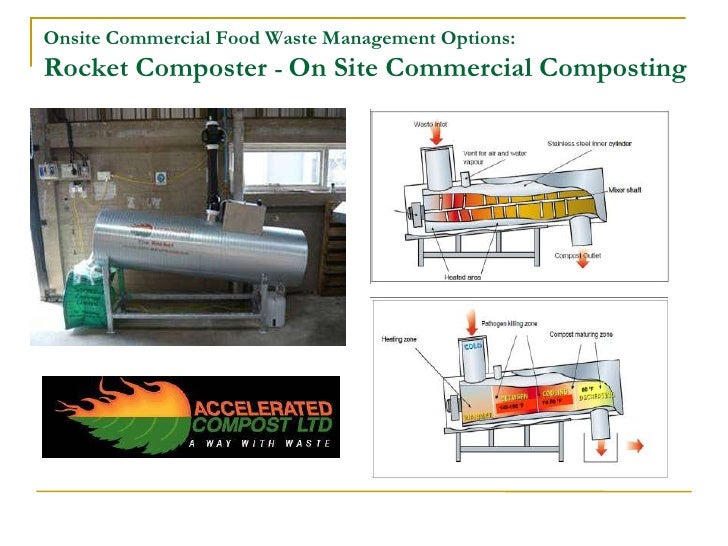
- A quick way to break down organic materials into compost.  This machine was created by Tiny Planet.  It gets extremely hot and spins the waste, making the composting process go faster than if it was left to naturally break down.
Image result for rocket composter
Via Environmental Services Inc.

"Red Wiggler Worms" E. Fetida.  - These are a species of worm native to Europe that live above the soil.  They are capable of consuming their own body weight in decaying materials a day.
Image result for red wiggler worms
Via Wikipedia


Our Steps:


Step One) Use the VegaWatt to reuse old oil, generating electricity for our Rocket Composter.
Image result for vega-watt
Via On-Set Comp


Step Two) Now that the Rocket Composter has power, we can use waste products from the same kitchen in order to break down compost.
Image result for rocket composter
Via SlideShare

Step Three) After the composting process, the soil is still not quite ready to house plants.  Thus, the worms are added.  The worms are able to eat a lot more than they usually would thanks to the compost pile being already kick-started for them.
Image result for red wigglers
Via Worms Ect


In the end, we will (hopefully) end up with healthy soil that can be used for plants, and less waste in the long run!  Compared to regular composting, this is much faster.  We can also see if this soil we created is any better than commercially sold soil.